



I notice it every summer when people sail with us for the first time: the water often seems "calm", until you're right in the middle of it and feel that it is alive.
In this blog, we clearly explain the difference, not to scare you, but to make your trip more enjoyable and safer. If you understand how the Meuse behaves, you will sail more relaxed, especially with children, students, or colleagues on board.
Why the Meuse behaves differently than still water
A pond is basically a container of water: little current, few surprises, and the wind is often the biggest 'opponent'. A canal, on the other hand, is designed for predictability: straight lines, controlled banks, usually a fairly constant water level, and a current that is limited or barely noticeable.
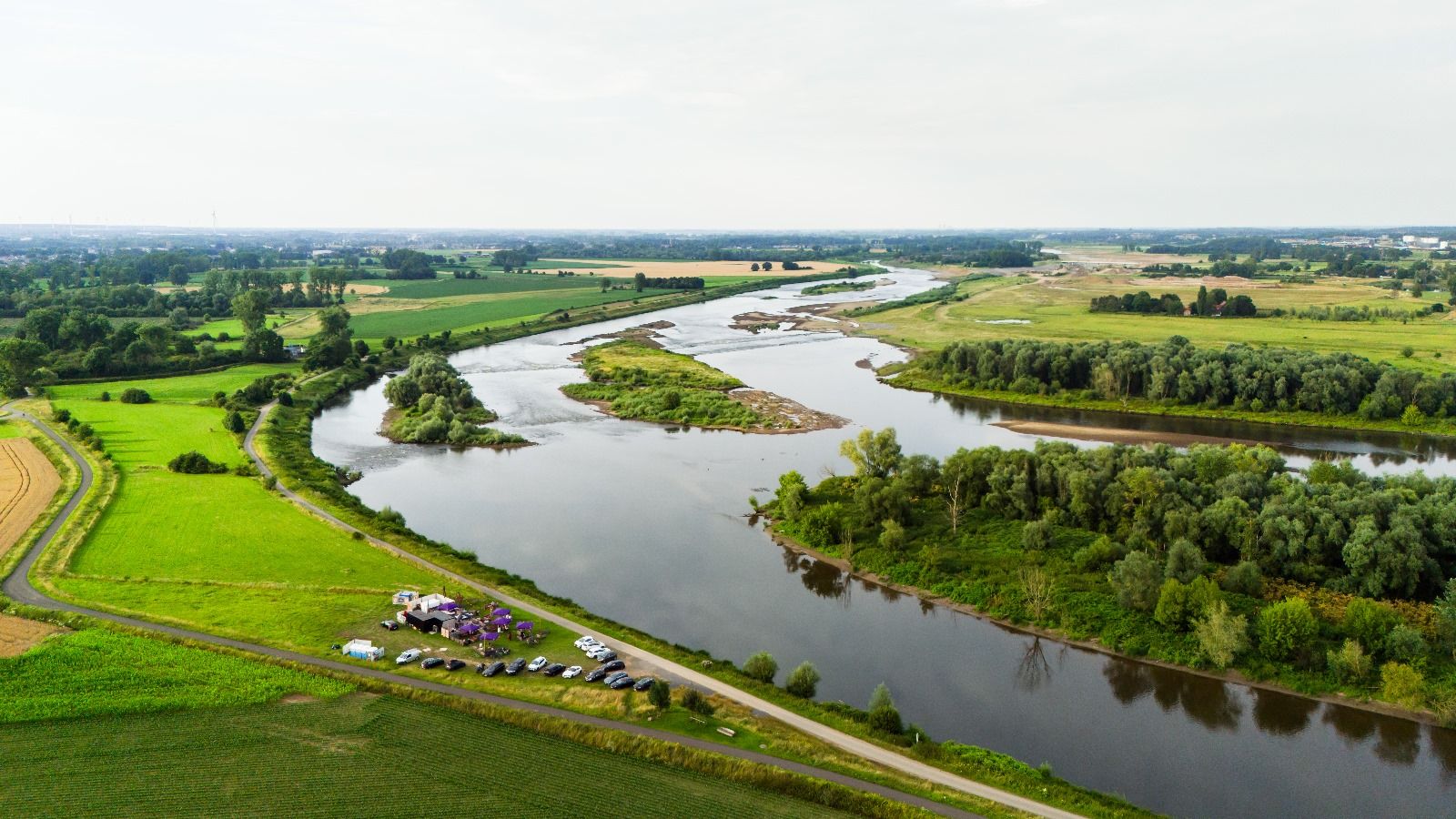
A river like the Meuse works differently. Here, nature determines the rhythm, with bends, shallow sections, changing currents, and stretches where the water speeds up. Anyone who truly understands the difference between a river, a canal, and a pond also understands why you should never set out on the Meuse thinking: "We'll see."
The Meuse is a river that is fed by rain, and you can tell.
The Meuse is a typical rain-fed river. This means that precipitation in the catchment area affects the water discharge and water level relatively quickly. A good description of the Meuse as a rain-fed river in one sentence: rain upstream may not yet affect the water level today.
As a result, the flow and water level in the Meuse can change faster than many people expect. That is not the case with a canal or pond.
Current, water level and shape: three factors that determine your journey.
On the water, it’s not just about "how long is the route?", but also about what the water does along the way. At Kajak Maasland, we paddle routes of 8 to 13 km through the Maas Valley, and that same distance can be a completely different experience depending on the water level.
- Current: in a river, the water pushes you along, but it can also suddenly pull you toward a bend or a narrowing.
- Water level: at a higher water level, recognizable landmarks (such as rocks or small beaches) disappear, and certain areas become navigable more quickly.
- Riverbed and banks: rivers shift, erode, and build up. Shallows can change, and this does not happen in a strictly canalized channel like the rivers you may know.
That is why you always hear safety instructions for water sports upon departure. These are not just for show; they are tailored to the conditions of the day.
Safety on the Meuse: what does that mean in concrete terms?
Life jackets are not an accessory, they are part of it
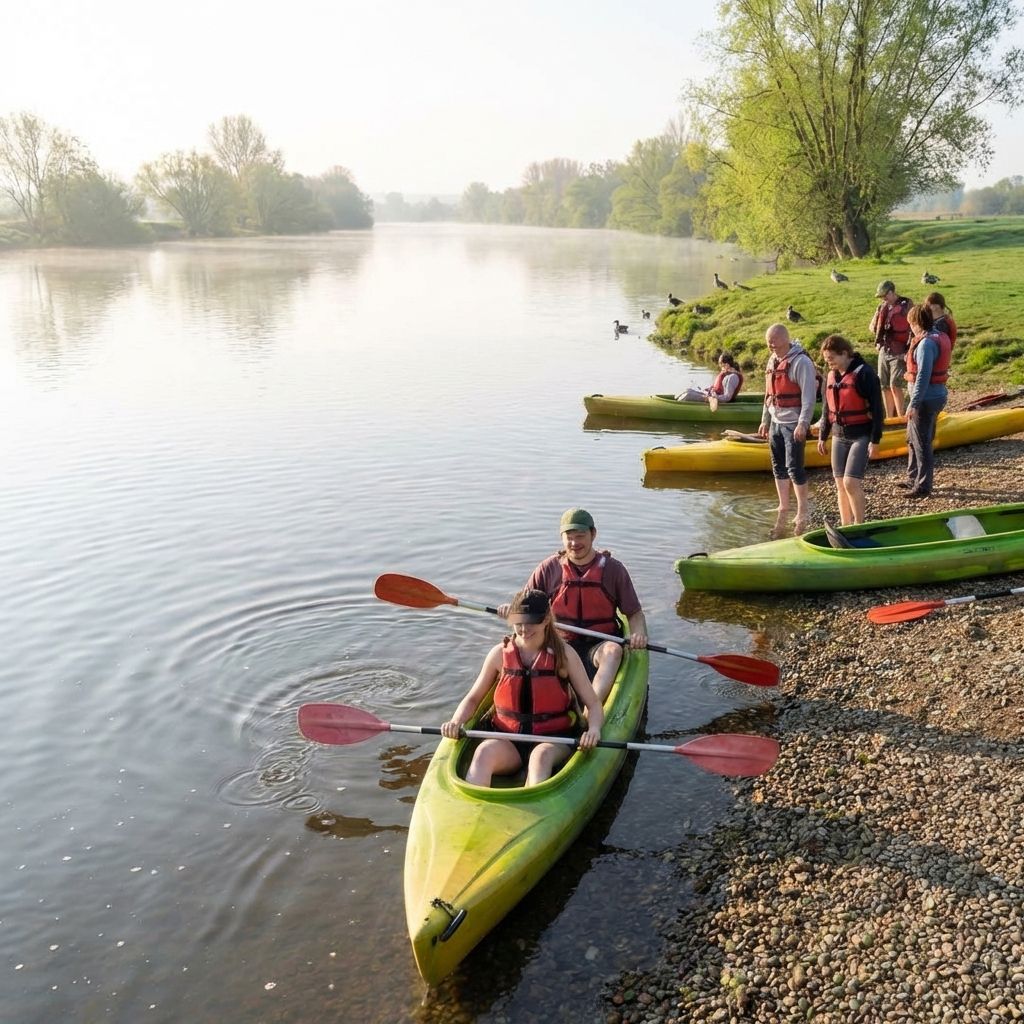
On our trips, you always get a life jacket, and you wear it throughout the entire downstream trip. That is not a minor detail; life jackets are mandatory on the Meuse in a recreational context, precisely because conditions can change. A life jacket provides buoyancy without you first having to “decide” to stay afloat, and that difference matters when you get startled or capsize.
|
|
Taking to the water with children or students as a team: here's how to keep it relaxed
A family outing or group day is a success when everyone feels good. Anyone who wants to sail safely with children on the Meuse is best advised to think in advance about supervision, agreements, and pace.
Practical agreements that really work (even for restless groups)
- Make one clear rule: everyone keeps their life jacket on, always.
- Agree on who the “front boat” and “rear boat” are in a group, so no one is left behind.
- Take breaks in calm places, not in areas where the water is likely to speed up or swirl.
- Avoiding alcohol during the descent led to reactions and risk assessments.
- Choose a boat that suits your group.
|
|
What to do in emergencies on the water
Even with good preparation, something can happen: a capsize, panic, a lost paddle, or someone who doesn't feel well. Then you don't want a discussion, but a plan.
A few successful principles for emergencies on the Meuse:
- Head toward the Belgian bank if you need to stop; help and access are usually easiest there.
- Stay together, count your group, and keep the boats close at hand.
- Call immediately if you’re unsure. Kajak Maasland can be reached during opening hours, and on the water, saving time is often the most important thing.
We also compile the most frequently asked questions in our FAQ with information about water safety and emergencies. Handy to review in advance, especially if you are coming with a youth group or company.
Book your departure.
Reservations can be made via the website www.kajakmaasland.be via our reservation platform.
|
|


